Part 5: Seeds of Rebellion – The Regulator Movement
The Cherokee war left a vacuum in the backcountry, and from that vacuum grew the Regulator movement.
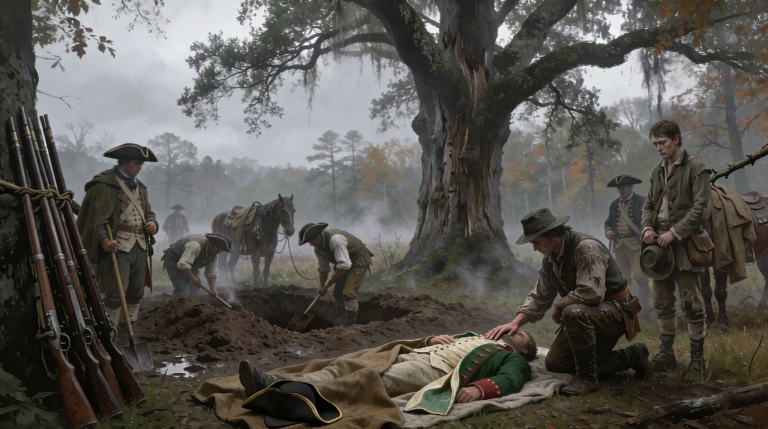
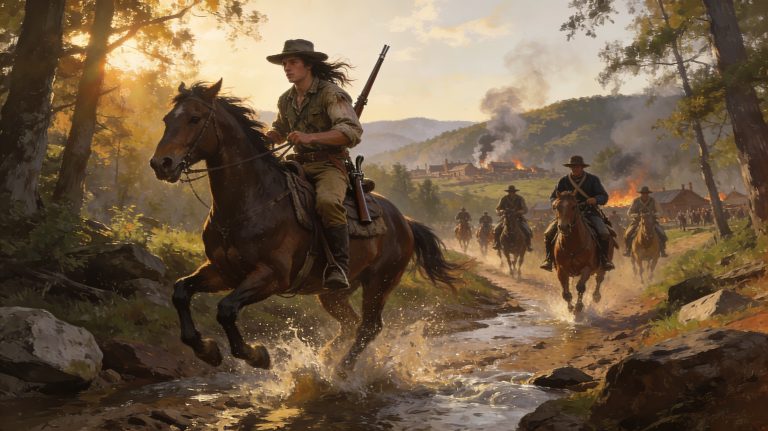
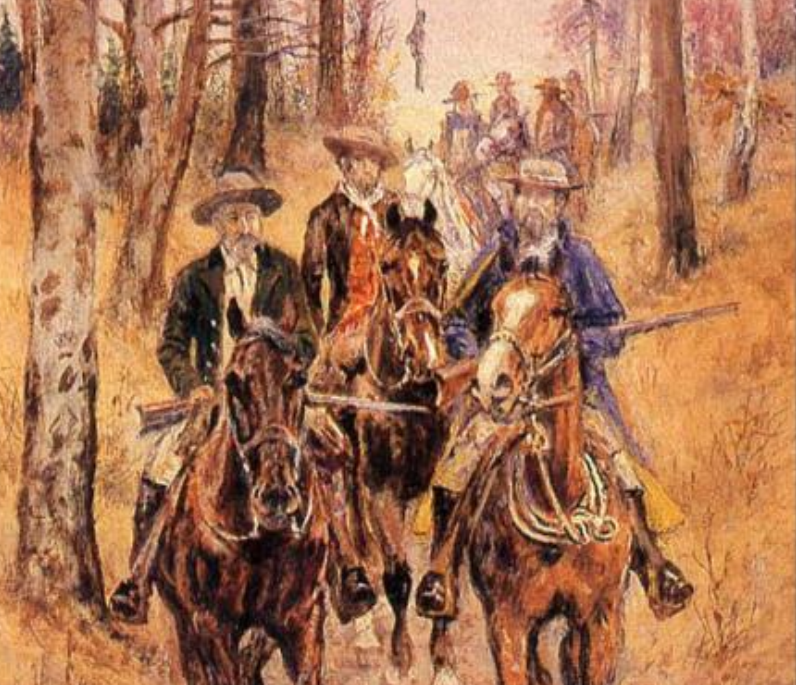
The “Regulators” were ordinary settlers—farmers, traders, and veterans of the Cherokee War—who banded together to suppress cattle thieves, bandits, and petty tyrants who preyed on isolated homesteads. Figures such as Thomas Sumter, Richard Richardson, and Joseph Kershaw became prominent voices insisting that if the government would not provide justice, the people would. They also believed the government in Charles Town had ignored them for too long, so they organized themselves to “regulate” the backcountry: riding in groups, chasing down suspected criminals, whipping offenders, and sometimes running people out of the district.
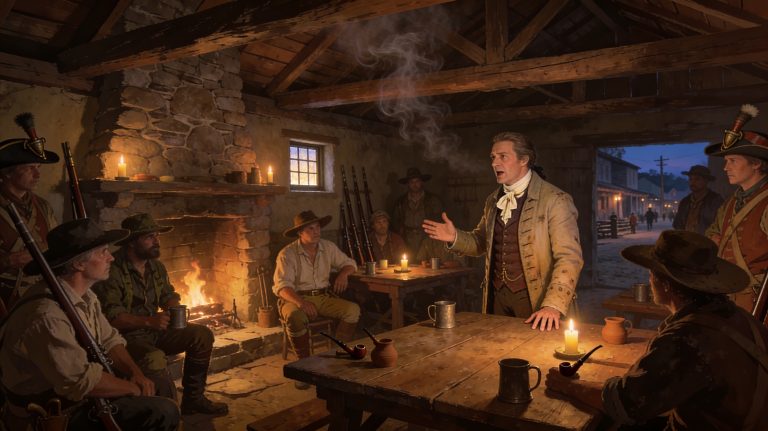
At first, many neighbors agreed that somebody had to restore order, but as the Regulators’ actions became more forceful and occasionally swept up people who claimed to be innocent, another group emerged calling themselves the “Moderators.”
Both the Regulators and the Moderators grew out of a shared problem—lawlessness—but each side had very different ideas about how to fix it. The Moderators did not necessarily oppose the Regulators’ basic complaints about crime and lack of courts, but they strongly objected to what they saw as vigilante excess—punishments without proper trials, intimidation, and the risk of turning neighbor against neighbor. Tensions between the two factions ran high, creating divided personal loyalties that would not soon be forgotten.
Meantime, in the lowcountry, the Charleston elites viewed the Regulators with suspicion, seeing in them the makings of rebellion against royal control. The backcountry, for its part, saw the lowcountry government as indifferent to their security and contemptuous of their hardship.
Out of these tensions emerged the fault lines that would later divide Whig and Tory in South Carolina: on one side, those who treated government as a distant privilege; on the other, those who insisted it arise from local necessity.
Order from Disorder: Courts and Districts
Unlike the Regulator movement in North Carolina which ended in a bloody showdown, the movement in South Carolina ended through a mix of compromise, new laws, and a negotiated local peace.
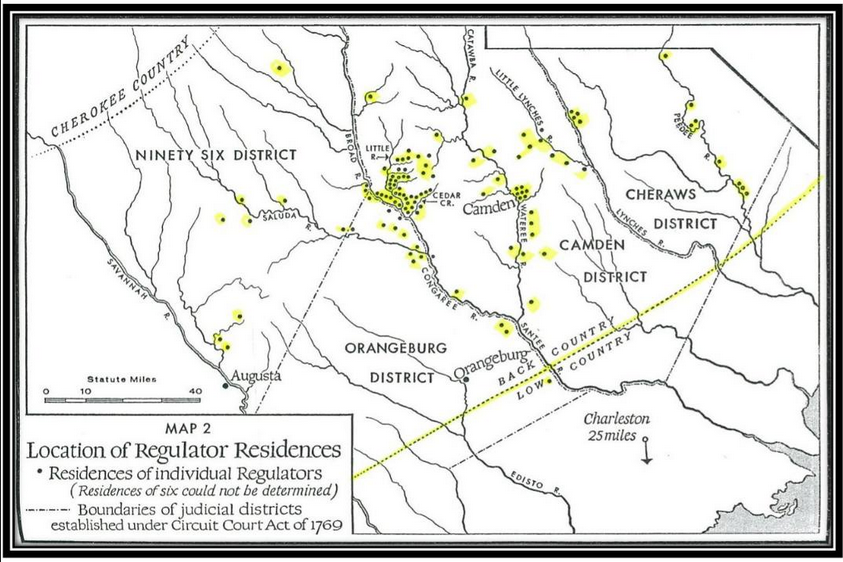
Colonial leaders in Charles Town gradually accepted that the Regulators’ main complaint was real: the backcountry had almost no courts, sheriffs, or jails and was overrun with thieves and vagrants. In March 1769, as the Regulator-Moderator tensions rose, leading men from both sides met. Ultimately they agreed to a truce that formally ended the standoff. At nearly the same time, the Assembly passed the Circuit Court Act of 1769, creating new judicial districts with regular courts, jails, and law officers in the interior, which gave people a legal alternative to vigilante justice.
With their main goals met, the Regulators quietly disbanded, and a few years later the royal governor issued a general pardon that wiped away most remaining legal actions against them—though the hard feelings between neighbors who had taken opposite sides lingered into the Revolutionary era
The resulting Circuit Court Act of 1769, established courts in the backcountry and replaced the rough vigilante rule of the Regulators with formal legal institutions. One of the most significant outcomes was the creation of the Ninety-Six District, encompassing much of the territory once governed—or contested—by the Cherokee.
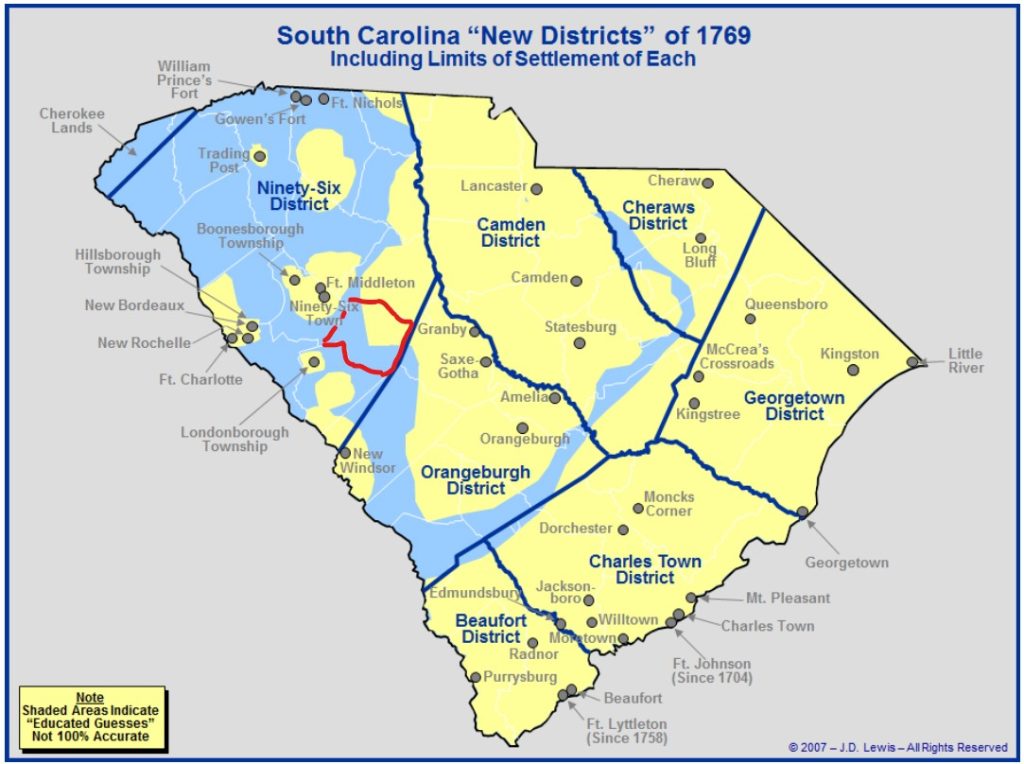
The footprint of Saluda County fell within the Ninety-Six District. For area settlers it marked the beginning of something like order. But beneath that new civic structure lay ideological divisions that the frontier years had forged—between authority and self-rule, coast and upcountry, Tory and Whig.
In time, those divisions directed South Carolina’s turbulent path into revolution.