Part 20: The Massacre at Cloud’s Creek
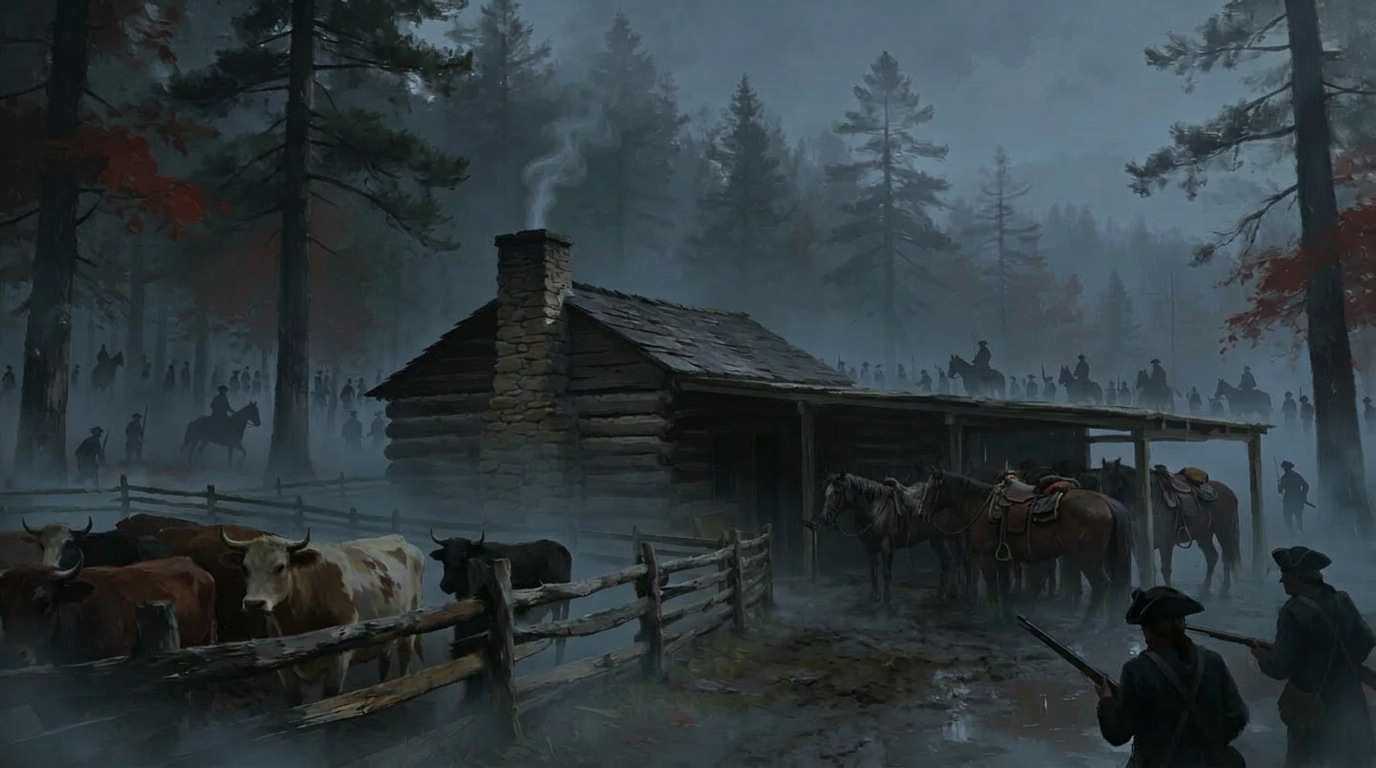
Dawn came gray and heavy over Cloud’s Creek the next morning. It was a day that would not be forgotten – November 17, 1781.
A mist was lifting from the water and the trees still dripped from the night’s rain.
In the yard and cabin, Turner’s men were slow to wake, limbs stiff, clothes still damp despite the fire. Powder and cartridges had lain near the coals all night; some charges were dry again, some hopelessly spoiled. Guards, posted in the dark, peered out into a world of fog and dripping branches. They saw nothing moving, and heard nothing but the rush of the swollen creek.
They did not see Cunningham’s riders until it was too late.
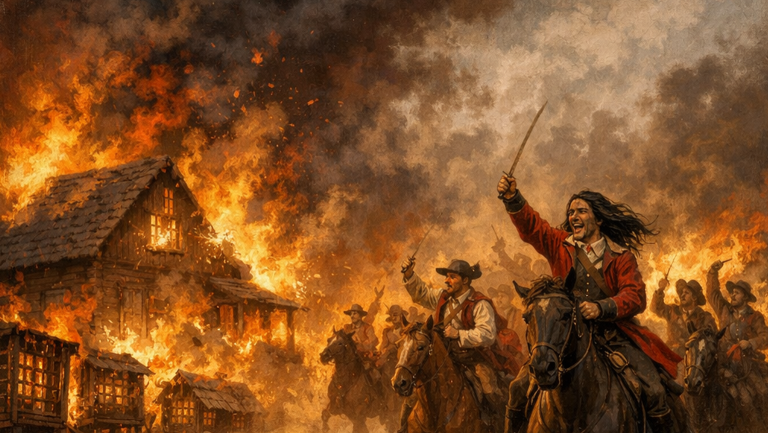
Sometime in that dim hour between full dark and clear morning, Cunningham’s Loyalists closed in around the Carter place. However many he had with him—scores at least, perhaps well over a hundred—it was more than enough to overwhelm the handful inside. His men spread through the trees and brush around the cabin, taking positions that ringed the yard and lean‑to where the horses stood.
The opening shots punched through the fog and into the cabin walls. A sentry cried out and fell. Horses screamed and jerked against their ties. Turner’s men scrambled for muskets and rifles, some reaching for weapons that would not fire, others flinging themselves to the door and window chinks to return fire as best they could. Powder spit, some guns roared, others only hissed in the damp.
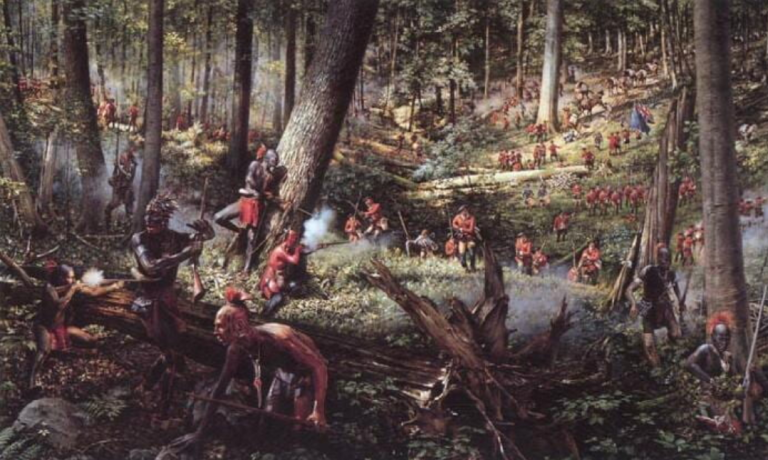
For a short, furious while, the little command fought back. They fired from the doors, through cracks between the logs, from behind chimneys and barrels in the yard. Cunningham’s men answered from every side, their balls punching into the walls, thudding into the ground, shattering what cover there was. As the patriots’ ammunition dwindled; the cabin grew thick with smoke and the sour smell of wet powder. Men dropped in the doorway and on the packed earth floor.
Outside, Cunningham’s men pressed closer. The men inside could hear them shouting, see shapes moving in the thinning mist, feel the limits closing. Powder was nearly gone. Several guns had fouled entirely. They could no longer hold.
Captain Turner called out for terms. Surrender was the only choice.
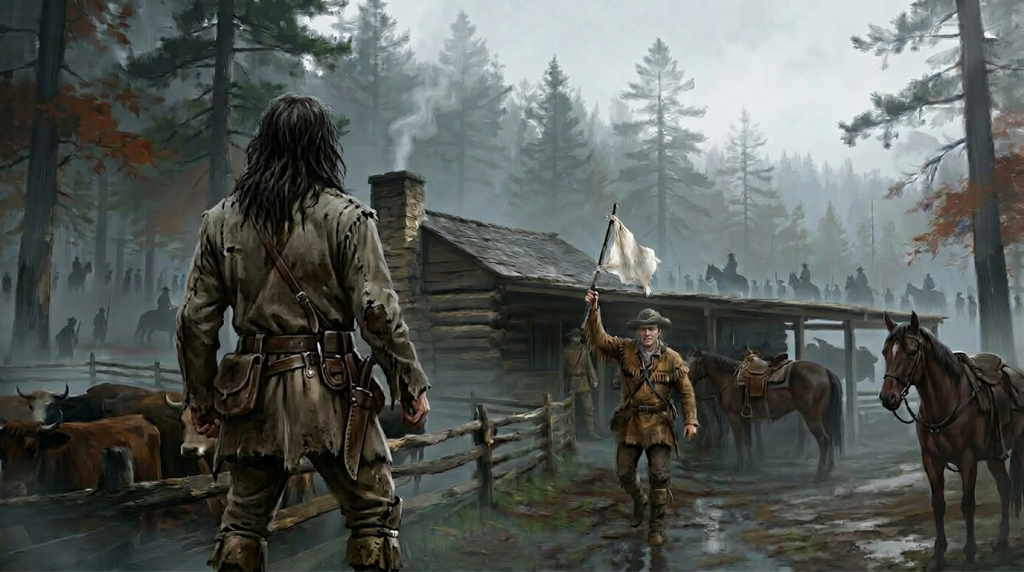
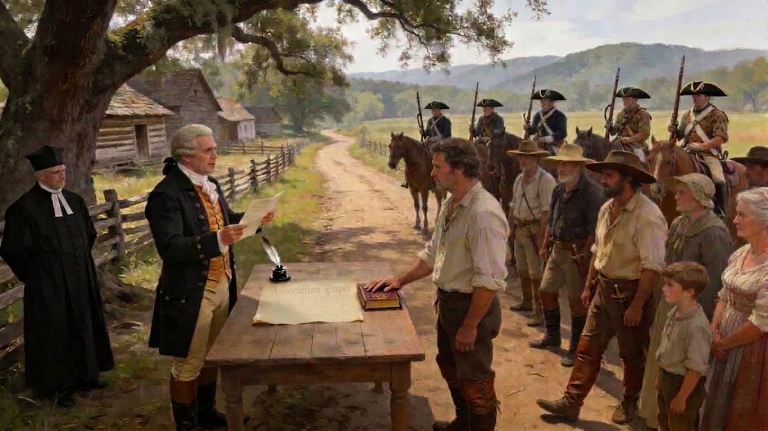
The firing slackened. Voices traded across the yard. According to later tellings, Cunningham demanded the names of those inside before he would speak of surrender. One by one, the defenders called out or were named: Turner, Butler, Foy, Rabun, and the rest—neighbors and friends from the lower Ninety‑Six.
When Cunningham learned that both father and son were in the cabin, any thought of mercy evaporated. Especially for the boy he believed had killed his friend, Radcliffe.
Someone relayed a message from Captain Butler: “Take me. Spare my boy,” was his plea.
Cunningham yelled to his men the two fateful words, “No Quarter!”
Inside, Jim Butler that fiery, impetuous young lad who had prayed for so many years to join the fray, knew his end was near. He took his musket, prayed for dry powder, and leveled one last shot out of the cabin.
It felled a Tory in the yard.
With that, the chance of terms evaporated.
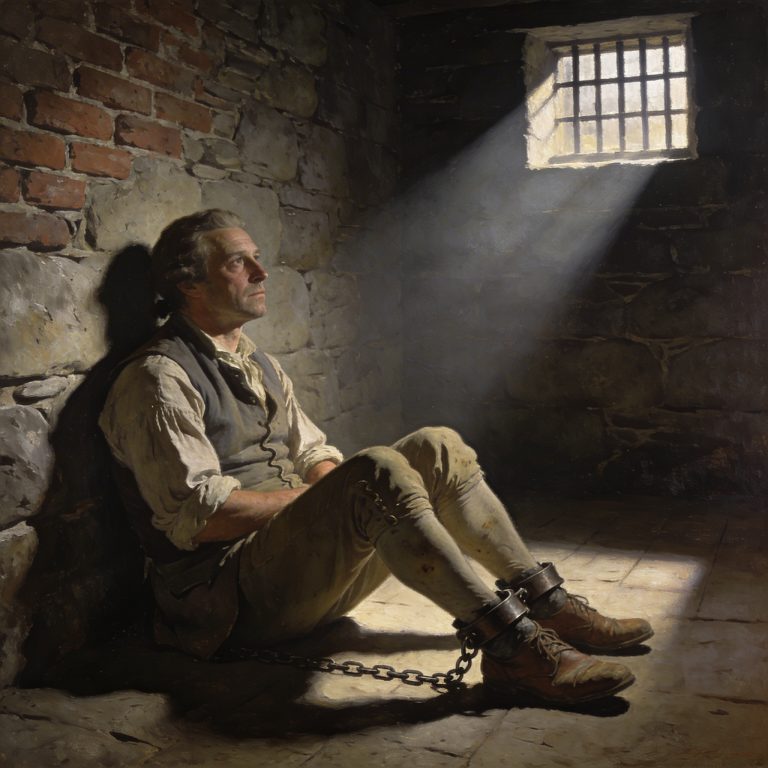
With all the dry powder used, there was nothing left to do. Turner and his men stepped from the cabin one by one, unarmed, and in full surrender.
Cunningham did not accept it.
The prisoners were herded into the yard. Some were made to sit on a ladder placed across some barrels. The rest of Turner’s little company—around thirty men all told—sat or knelt in the mud, hands empty, while a ring of Loyalists closed around them with drawn swords.
What followed was not a battle but an execution.
Steel flashed and fell. Men were cut where they sat, run through the chest and belly, hacked at the head and shoulders. Some died quickly, others under repeated blows. No rank or age brought much distinction: Captain Sterling Turner, who had led the party, went down among his men; young Jim Butler, already bloodied, was cut to pieces in the line; neighbors like Peter Foy and Benjamin Rabun fell beside them.
The yard that had promised one night’s refuge became a slaughter pen.
When they came to Captain James Butler Sr., Cunningham’s rage found its focus. Butler had been a marked man for years, “remarkably active” against Loyalist forces it had been said. And now the father of the youth believed to have killed Radcliffe was helpless before him.
They cut him with more than ordinary fury.
Reports sent later to General Greene would say that both of Butler’s hands were hacked off while he still lived, and “many other cruelties” inflicted—so shameful that the writer declined to set them all down.
By the time the swords were sheathed, roughly twenty‑eight men lay dead around the Carter yard and cabin. Only two would walk away. One was Benjamin Hughes, who managed to escape when the recovered cattle stampeded through the yard. Hughes seized that one wild moment, broke free, and plunged toward Cloud’s Creek. He threw himself among the driftwood jammed along the swollen bank. Loyalists probed the tangle with bayonets and blades, stabbing into brush and logs, but by chance or providence they missed him.
He stayed there, pressed into the cold wet mass, until long after the sound of killing faded.
The other survivor was Bartlett Bledsoe. He came out of the house leaning on his comrade Benjamin Rabun, both refusing to give their names when Cunningham’s men demanded them. A saber stroke split Rabun’s skull; he dropped where he stood. For reasons no one would ever fully explain, Bledsoe’s life was spared.
Those who knew Bledsoe said he was never quite the same again.
When the Loyalists rode away, the Carter place was silent save for the creek and the moan of wind in wet trees. Blood had soaked into the trodden earth around the barrels and broken ladder. Bodies lay where they had fallen—Turner, the Butlers, Foy, Rabun, and two dozen more, most of them local men from the lower Ninety‑Six – husbands and sons who had gone out to ride another scout and would never come home.
As Cunningham left, primed for more killing, he left a detachment of Tories behind to ambush any burying party and, hopefully, to capture or kill an even more prominent son of James Butler, William, who was, himself, a captain of rangers and who was expected to hasten to the spot.
Fortunately for William, he was too far from the scene to reach it before Cunningham’s sentries tired of waiting and moved on.
It fell to the living to make sense of it.
At the Butler home, near Mt. Willing, Mary and some of the younger children were recovering from smallpox, unable to go when the terrible news arrived.
When the danger of Cunningham’s return had lessened, it fell to Captain Butler’s sister Sarah, and his sixteen‑year‑old daughter, Nancy – always his favorite – to recover their dead.
The two women came upon the Carter place as the survivors had left it: a ruined cabin, trampled yard, and the dead scattered and piled where the swords had found them. The men of the neighborhood and kinfolk who had come with them set to the task of lifting bodies from the mud and blood.
Nancy moved among the bodies – and pieces of bodies – looking into faces she knew, searching for her father and her brother. She found Captain Butler at last – not by his features, so mutilated were they, but by the familiar Bible in his pocket.
Jim lay near his father, cut and hacked like the others.
Neighbors dug a large grave for the bulk of the slain—a mass resting place for most of Turner’s little company. They helped Sarah and Nancy dig a separate grave for James Butler Sr. and James Butler Jr., so that their family might know where to come and remember them.
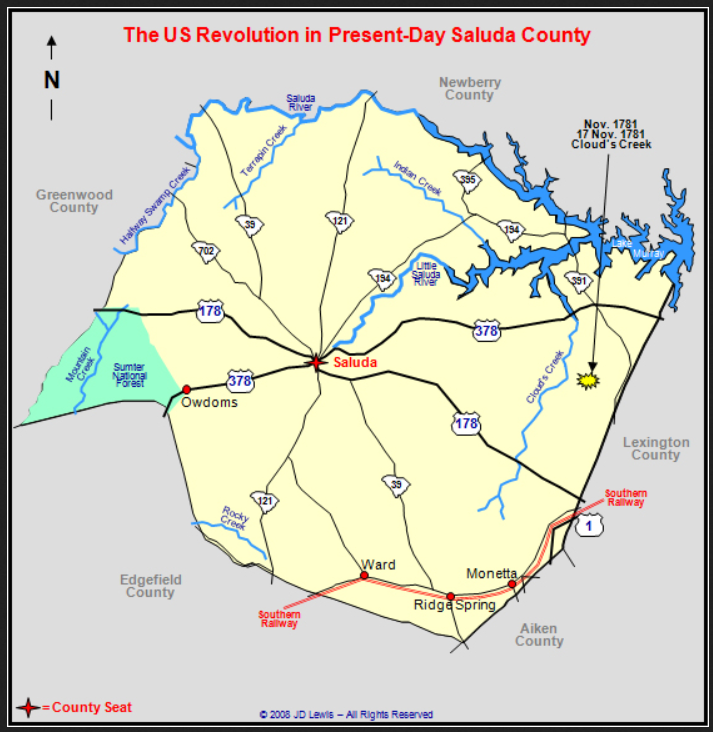
The Carter place slowly emptied. But along Cloud’s Creek, for those who lived in the footprint of Saluda County, the war had already reached its bitterest point.
And long after the smoke of the Revolution faded, the people of that land remembered what happened beside that quiet creek—
Unknown
Where the rain fell,
The guns would not fire,
And mercy never came.