Part 8: Powder and Lead
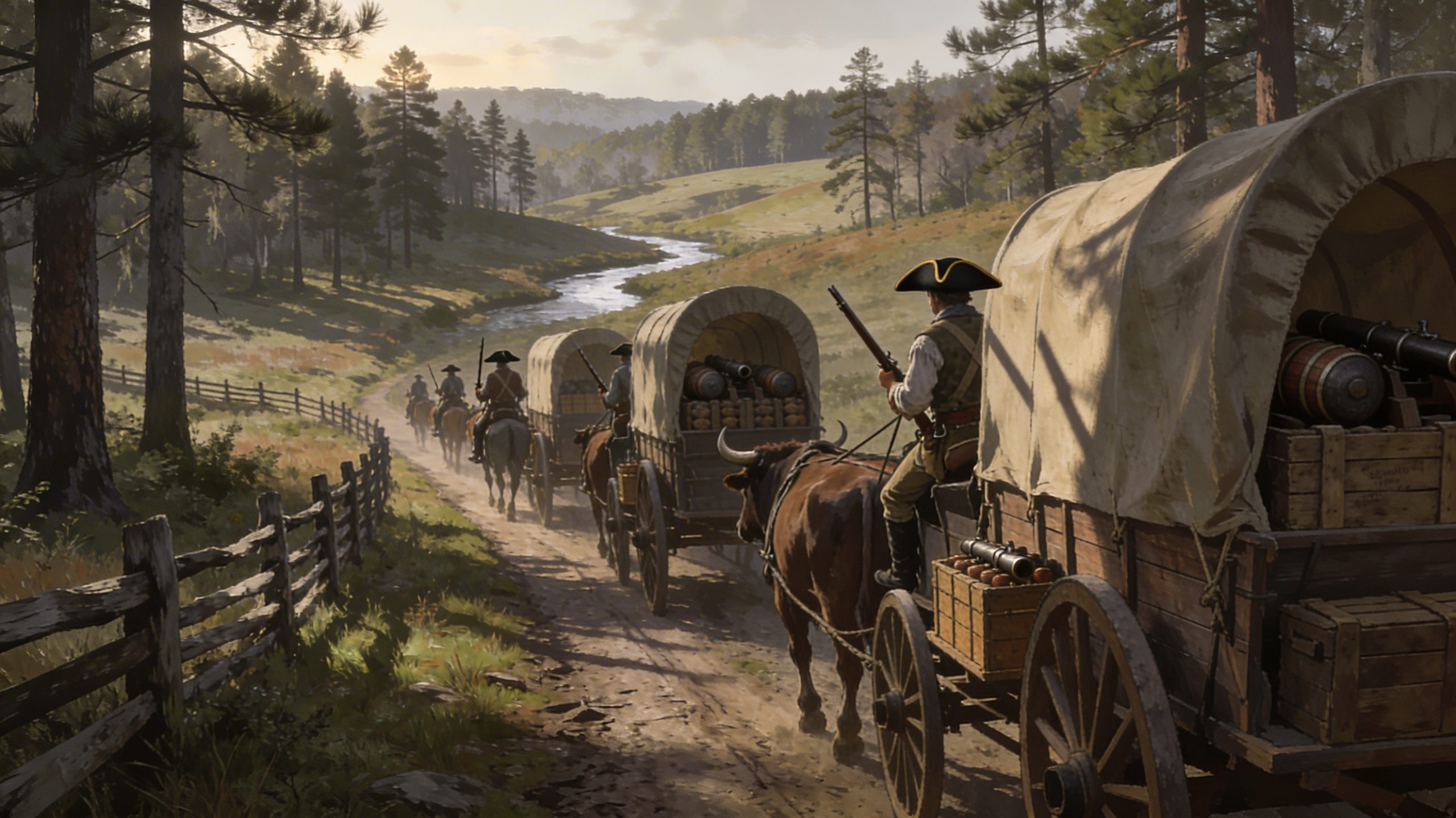
Powder and lead moved first, long before armies did.
In the backcountry and in Charles Town alike, once word came of Concord and Lexington, munitions became the coveted commodity. Men reached for muskets only when they were sure they could keep them fed.
Fort Charlotte
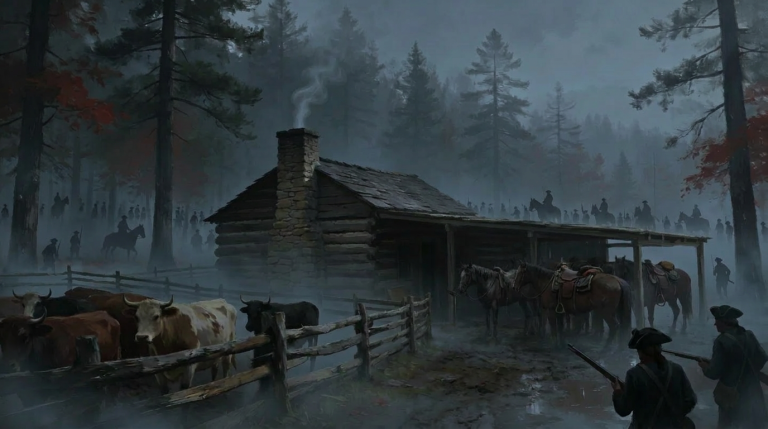
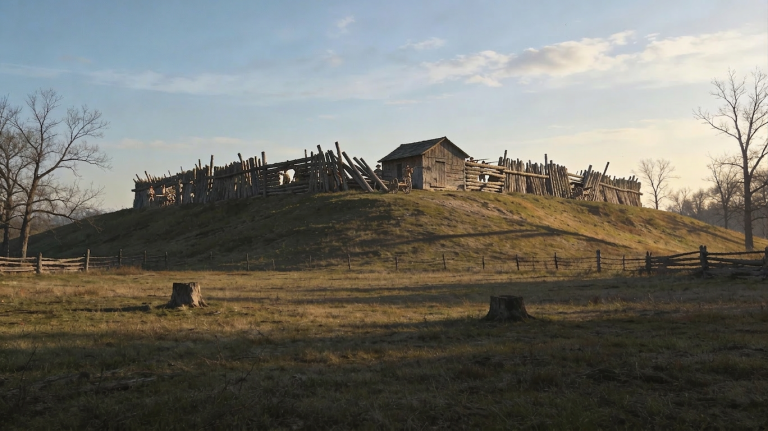
It was in Massachusetts, in April 1775 when the shots were fired that marked the official start of the American Revolutionary War. On July 12, in the Ninety Six District, Patriot rangers under Major James Mayson, seized a stockpile of powder and lead at Fort Charlotte on the Savannah River. The munitions had been stored there by the Crown in earlier years due to the Cherokee threat in the backcountry.
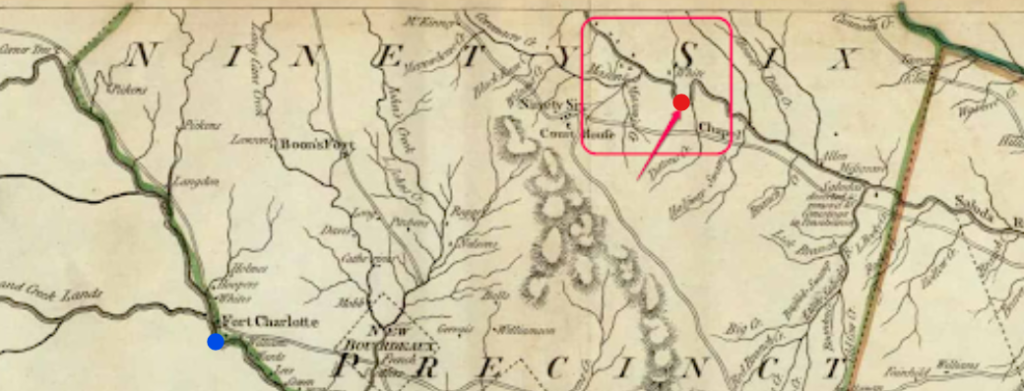
This marked the first overt revolutionary action in the state of South Carolina. Facing a severe shortage of supplies amid rising tensions with Britain, the Patriots targeted the fort’s stockpile of to arm local militias. They captured it without bloodshed after the small garrison surrendered peacefully. Mayson then transported the seized powder and lead to nearby Ninety Six for distribution among colonial forces.
It should be noted that, serving under Major Mayson, was a the young William Cunningham, who had ultimately broken ranks with his Loyalist Cunningham cousins, Robert and Patrick, and declared for the Patriot side.
Raids on Charlestown’s powder
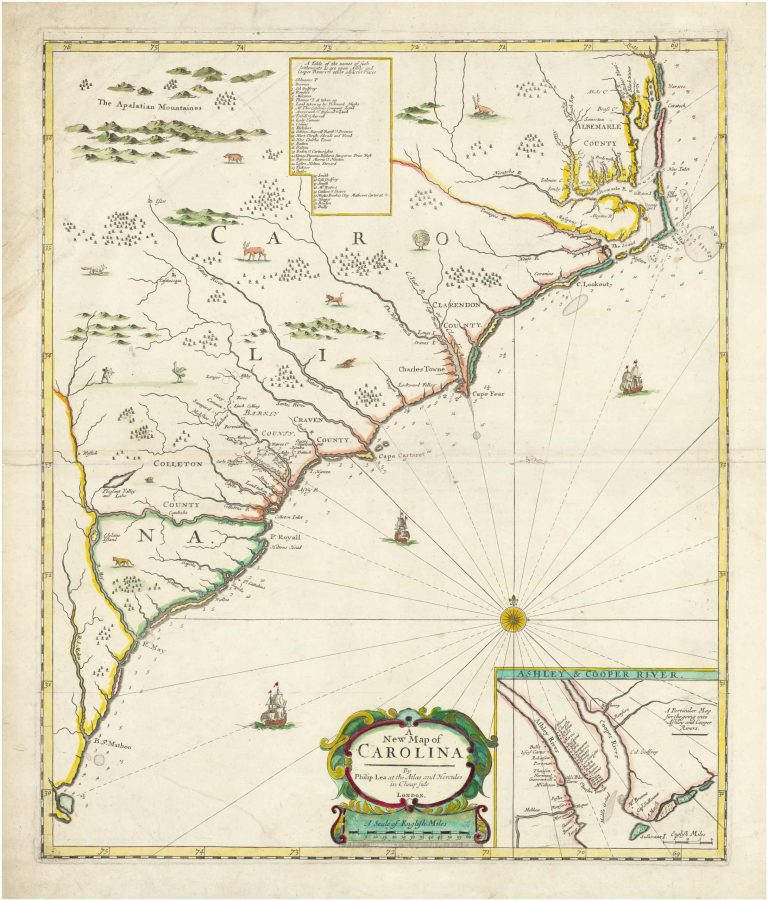
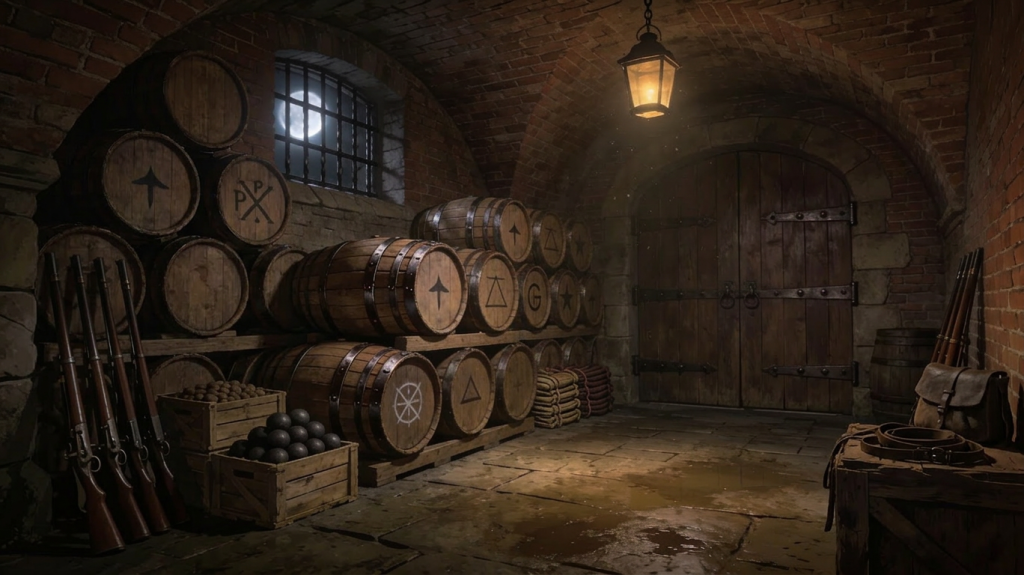
While rangers seized powder at Fort Charlotte, Patriots who now dominated Charles Town quietly moved to take what remained of the Crown’s munitions in and around the city. A Secret Committee organized night raids on local magazines, breaking into armories and powder houses on the Neck and across the Cooper to carry off muskets, shot, and heavy kegs of gunpowder.
Publicly, they claimed these seizures were meant to put the colony “in a state of defense”; in truth, they also meant that any move by the royal governor against the Provincial Congress would be backed by nearly empty magazines. Some of the powder stayed near the coast for forts and militia, and a hidden cache was walled up inside the Exchange and Provost.
But Patriot leaders also understood that if war came, it would likely begin in the divided backcountry, where Cherokee allegiance could tip the balance. Powder, more than speeches, would decide who controlled that frontier.
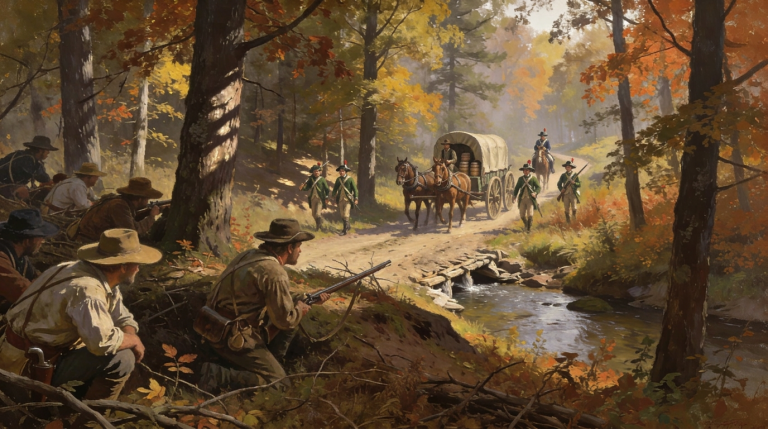
In October the Council of Safety sent a large wagon train of gunpowder and munitions from Charlestown toward the Cherokee towns, guarded by a small detachment of rangers moving up from the Lowcountry towards the Ninety Six District.
That powder never reached its destination. As the wagon train rumbled north through the pine woods and creek bottoms of what is now Saluda County, men on both sides understood that whoever controlled that load of powder would control the opening moves of the war.
The confrontation that followed—an ambush at a shallow crossing of Mine Creek—would turn a secret shipment into the first open clash over who would command South Carolina’s backcountry.