Part 22: The Chase at Lorick’s Ferry
The fires of the Bloody Scout had barely cooled when the cycle of revenge turned once more.
In the spring of 1782, word reached the Saluda River settlements that “Bloody Bill” Cunningham was in the area again with a small party of Loyalist raiders. They had camped near Lorick’s Ferry, a crossing on the Saluda River not far from the site of the Clouds Creek massacre.
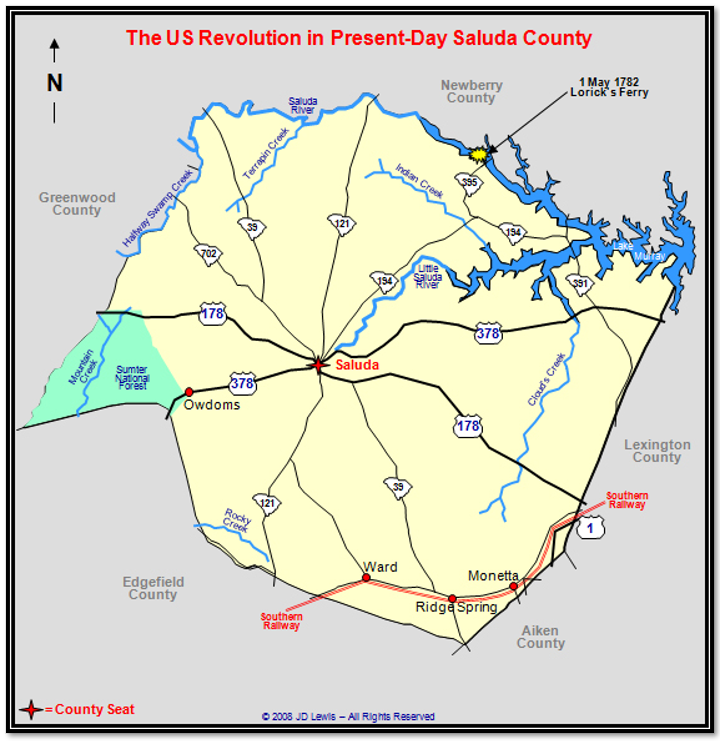
Capt. William Butler—now the head of what remained of his family—had spent the months since November grieving hard for his father, James Butler Sr., and his younger brother, Jim. His sister, Nancy, and his Aunt, Sarah Butler Smith, had been the ones who went to the grisly scene at Clouds Creek. They identified James and young Jim and, with the help of neighbors, took their bodies home to be buried.
Over the next few months, William had pried all the details from his aunt and sister – though neither wanted to talk about it – and the descriptions obsessed him. His dreams turned to nightmares, and he constantly imagined that, had he been with them, he could have saved them both.
In reality, that was not likely. Fortunately for him- and for his disconsolate mother – he had been on ranger duty at the time, too far away to get to the scene quickly. Bloody Bill had expected him and had posted several men to lay in wait for him at Cloud’s Creek. They finally gave up and rejoined Cunningham for further raids.
So, that evening in late April, when William heard Bloody Bill and his men were camped near the Saluda River, he gathered his own men, many of whom had also lost kin or neighbors during Cunningham’s bloody rampage through the Ninety Six District.
Using a clever stratagem, Butler’s brother Thomas, pretending to be a loyalist sympathizer wanting to join Cunningham’s raiders, tricked a relative of Cunningham’s into revealing the exact location of their Loyalist camp.
They were about thirty patriots, all told, when Butler set out to settle the score.
At first light on May 1, 1782, the Patriots struck, and the surprise was complete.
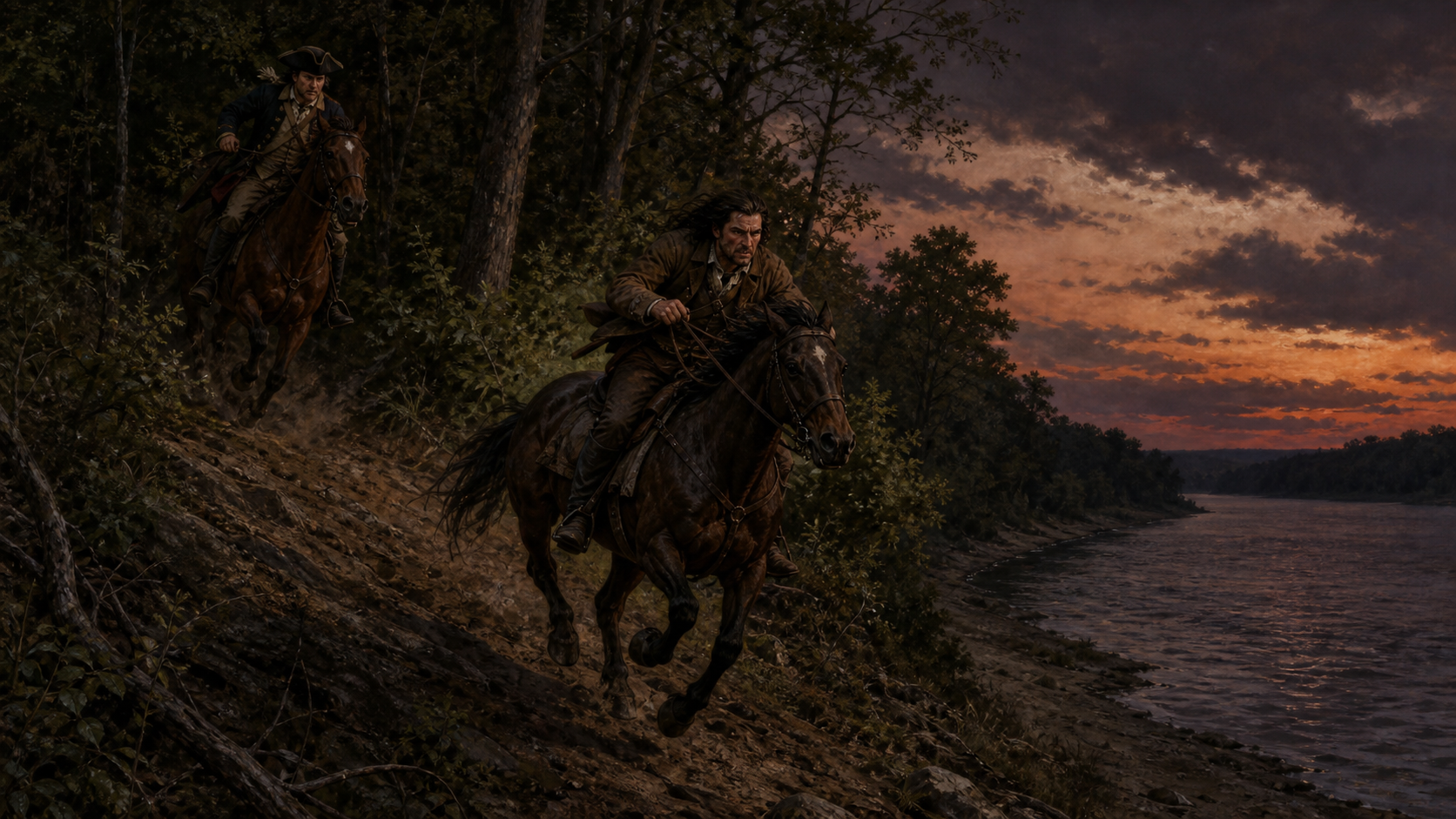
Cunningham’s men fled in every direction. Bloody Bill, himself, sprang onto his horse and raced for the river, with Capt. Butler in hot pursuit.
As they thundered through the woods, Cunningham’s sword caught in a bush and was yanked from his hand. Butler seized the weapon as he rode past—a trophy and a symbol of the justice he sought—but he could not close the distance. Cunningham’s horse plunged into the Saluda and swam to the far shore, carrying its rider to safety.
Several of Cunningham’s men were overtaken at the water’s edge. In the heat of the moment, with years of hatred and fresh grief fueling them, Butler’s followers opened fire. But Butler, seeing a slaughter about to begin, raised his voice above the chaos.
“Stop!” he ordered. “We came for Cunningham—not for indiscriminate killing.”
His men obeyed.
The firing ceased.
The surviving Loyalists were allowed to escape across the river.
Cunningham made his way back to Charleston, but his days as an effective partisan leader were over. He never again raised a significant force in the backcountry. The sword taken from him that morning at Lorick’s Ferry would hang above William Butler’s mantel for the rest of his very long life, a tangible reminder of a pursuit that came so close, yet remained unfinished.
But in that moment at the river’s edge, William Butler had made a choice. He would not let a lust for revenge consume his life. He contented himself with letting Cunningham fade into the river and into the night, then turned his energies toward a future of service and healing.
Cunningham, by contrast, fled into exile—first to Florida, then to the Bahamas—where he lived out a short and empty life, dying in Nassau in 1787. He was only about thirty years old.
The war still had a few months left to run, but for Butler the personal chapter of vengeance was drawing to its painful, imperfect close.
William Butler went on to serve his state and nation with distinction for decades: as a member of Congress, major general of the South Carolina militia, and as a prosperous planter. He married Behethland Foote Moore, a patriot heroine.
Their sons and grandson would also make their marks on South Carolina history, and Behethland became the matriarch of generations of Butlers in Saluda County.